The pipeline that
configures itself.
Every hire starts as a request and ends as an exit. The rooms, the rounds, the offer, the docs. One system, one thread, start to finish.
A spreadsheet built for two hires a month, forced to run forty.
When the company had a handful of open roles at a time, hiring worked fine out of a shared spreadsheet. The TA knew every candidate by name, called them directly, and tracked where they were in a tab. That's not a broken process. That's just a small one.
A celebrity endorsement changed the trajectory overnight. Within months they needed to hire forty people a month with a team that had barely grown. The spreadsheet was still there. Every role needed its interview sequence recreated from scratch. Rounds weren't tracked anywhere the whole team could see. Offer status lived in whoever made the last call. Candidates went missing between stages because nobody owned the handoff.
The TA was spending more than half the week on coordination. Not because the work was complex, but because there was nothing underneath to carry it.
Four constructs. Everything configures from them.
Pools hold the people. Services define the activities. Trees sequence those services gate by gate. Rooms bring all three into one live environment, a space that opens automatically for every candidate the moment a hiring request fires. Every phase in the pipeline is a combination of these four things.
The request becomes a posting
The whole thing starts with one record. A hiring manager puts in the role, the JD, reporting line, interview sequence, and the offer range they're working with. That goes for approval, gets signed off, and the job goes live. Sourcing kicks off on both ends.
Every decision downstream traces back to this one record. The interview rounds, the offer bracket, the reporting line. Same source, all the way through.
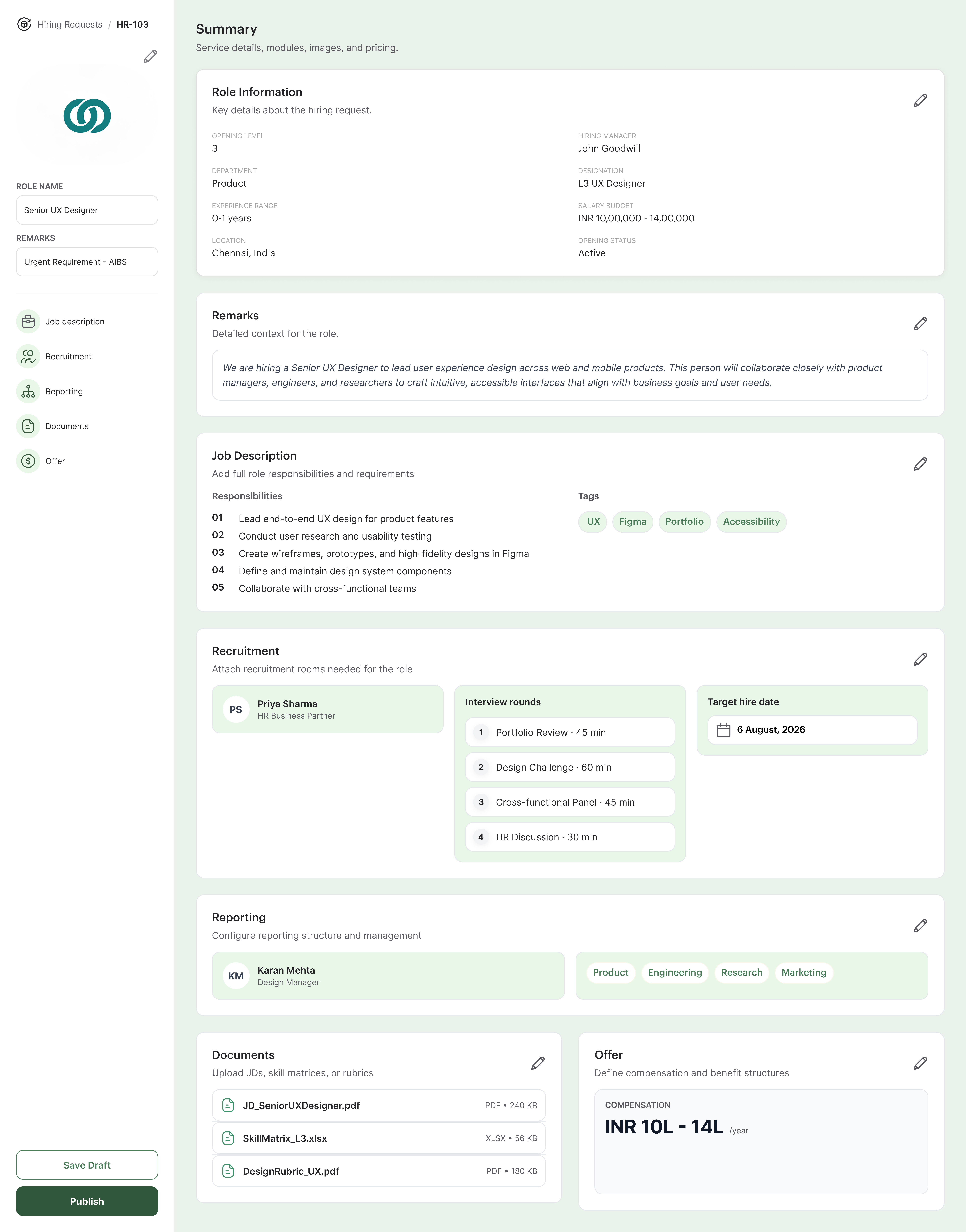
Sections within the request
Interview rounds and their timings are set upfront. Each round becomes its own sub-room once a candidate comes in.
Reporting line, attached files, and salary bracket all go into the same request. Everything the TA and hiring manager need is already there before sourcing starts.
A room fires for every candidate
The moment a candidate comes in, a room opens for them. The TA, the hiring manager, anyone listed as panel in the original request gets pulled in. The candidate shares their CV in the room, the AI reads it and surfaces the profile straight away: name, experience, employment history. The team sees it the moment they open the room.
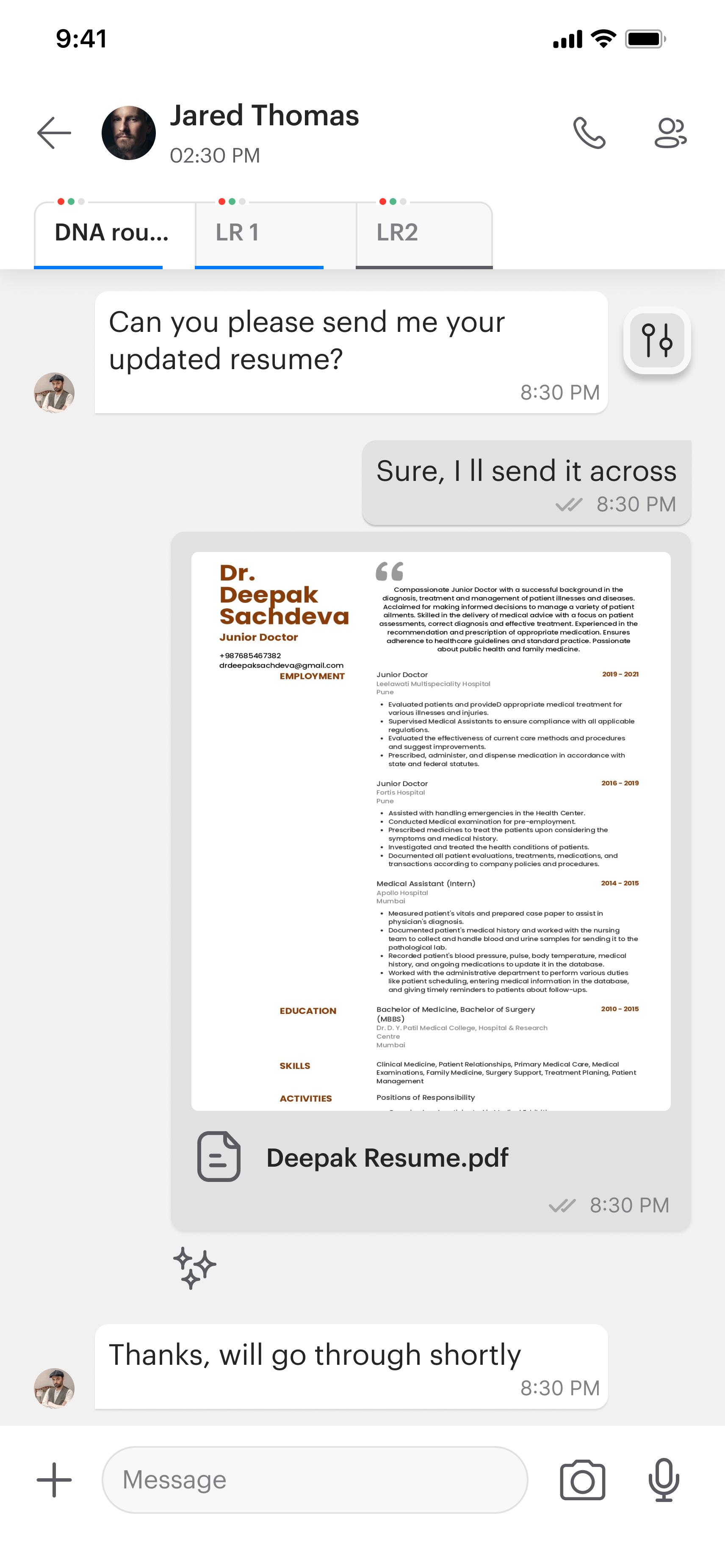
the CV
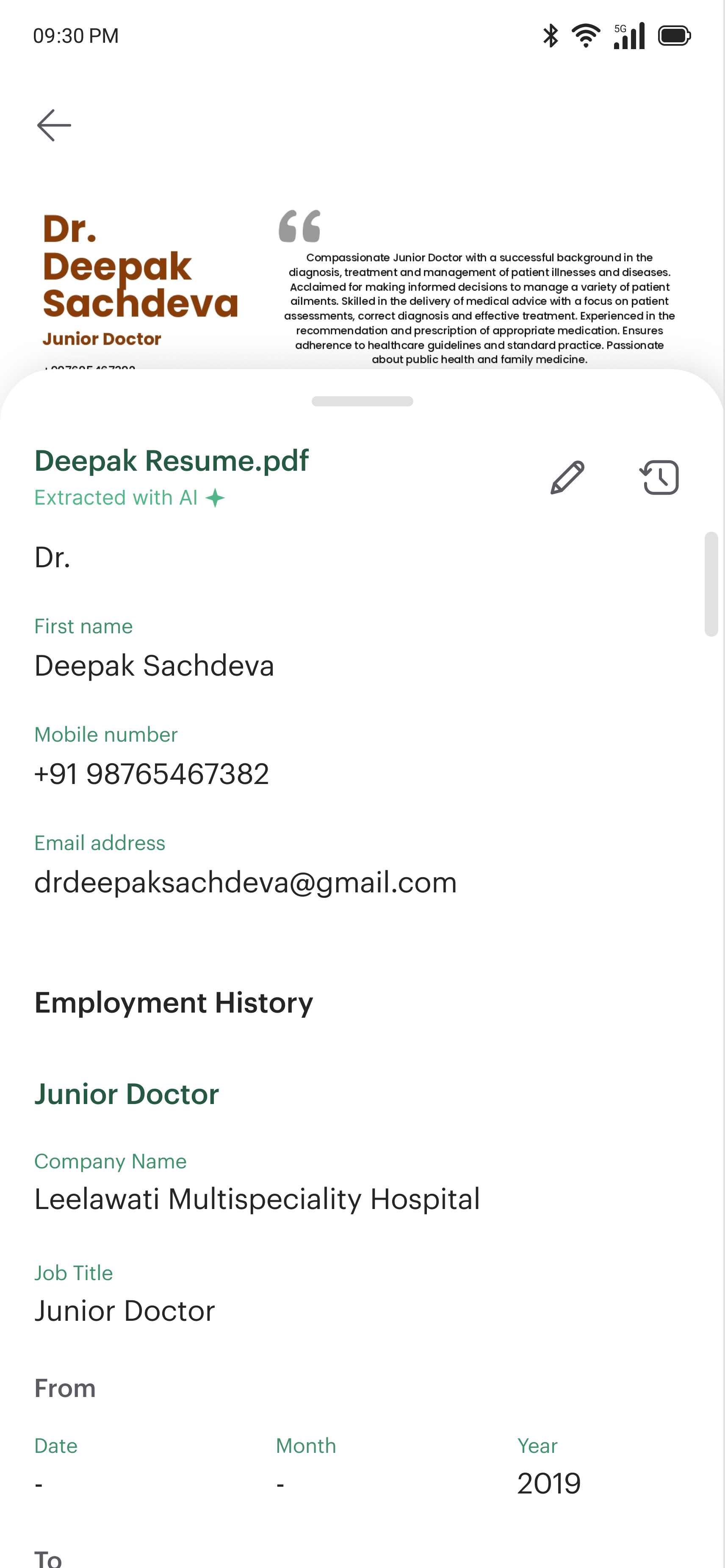
The moment a candidate sends their CV, the AI reads it and surfaces the profile: name, experience, employment history. The team sees it the moment they open the room.
Sub-rooms per round. One decision gates the next.
Inside each recruitment room are sub-rooms, one per interview round. Whatever the sequence was in the hiring request, that's what gets built out. Each sub-room has its own people and its own call. The candidate moves down only when each round gives a clear. If it doesn't, that's where they stay, and it's all on record.
The offer inherits from the request
Once all rounds are cleared, the offer's mostly already written. Salary range, benefits, role level were set back in the original request. The team puts in the final number, negotiates if needed, and sends it. When the candidate accepts, docs get collected straight away.
The candidate becomes a staff record
Once the docs come in, the candidate becomes a staff member. Leave balance calculates from their joining date. Promotions, reimbursements, HR requests from here on all live in the same profile.
Exit lives in the same room
When someone's leaving, an exit sub-room opens inside their existing room. Same thread, same people, just scoped to the exit. Once it's approved, every task they owned gets reassigned automatically, timed to their last day. The handoff happens on its own.
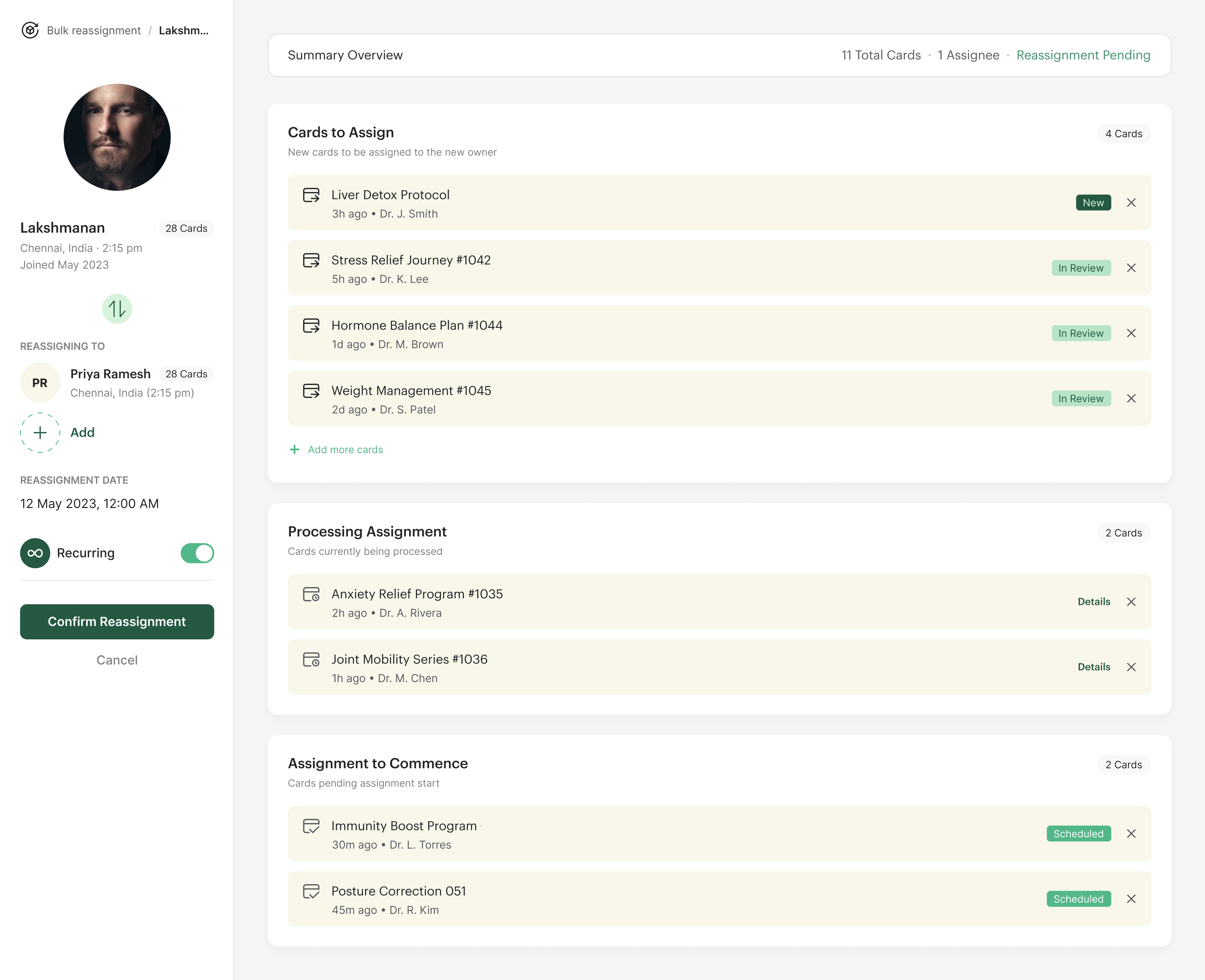
From logistics to decisions.
- 2 to 3 hires per month, run from a shared spreadsheet
- Interview rounds recreated manually for every new role
- Candidate status tracked by whoever made the last call
- TA spending over half the week on coordination, not decisions
- Close to 50 hires per month from the same team size
- Rooms auto-configured the moment a hiring request is submitted
- Every candidate tracked in their own room from CV to offer
- TA focused on decisions, system handles all the routing
at peak
from 2
per candidate
"We used to run two, maybe three hires a month on a good month. We're close to fifty now. The manual scheduling, the spreadsheet tracking, the back-and-forth on interview slots. Most of that just doesn't exist anymore. We're running a hundred and twenty interviews a day where we used to do ten. The system handles the routing. We show up and make decisions."
"Exits are clean now. One flow, everything routes on its own. We're about to add automatic reviews and promotions to the same logic, which will take a lot off the team. Payroll has been the biggest relief. It reads directly from each employee's profile, so the numbers are always right. No separate reconciliation."