Behind every price,
three tiers of truth.
The store isn't a product page. Clinical care and supplements share the same cart, the same register. The price a patient sees is the tip of a layered system built on atomic configuration, operational bundling, and a commercial surface, with AI handling the messy parts at checkout.
Every sale ended with a manual payment link sent over WhatsApp.
The sales process was a phone call. A lead would come in through marketing, someone on the team would call them on WhatsApp, walk them through whatever programs were on offer, and follow up two or three times until they were ready to buy. At that point a payment link got generated and sent manually. Nothing was self-serve, nothing was automated, and the catalog existed only in what the sales team chose to say during the call.
That model works at low volume. It breaks when the client base starts to scale. Follow-ups slipped when no one remembered to make them. Pricing had no single source of truth. A ninety-day program was a different number depending on who quoted it and when. Renewals had to be initiated manually every time, for every client. Orders were tracked in someone's head or not at all.
The goal wasn't to remove the personal touch. It was to build a system that handled the structure so the team had more room to actually be personal.
Four layers. One chain from atom to storefront.
Every product and service starts as an atom, a raw definition holding its native attributes. Atoms bundle into Room Configs, which hold delivery guidance and become the actual offering. Room Configs get a commercial sticker at the Store Item level, then surface on the Store Front for purchase. When payment clears, the relevant Room Configs fire automatically and fulfillment begins.
Every product and service starts at the atomic level.
Before anything reaches the store, it gets configured as a sub-offering, the source of truth. This is where the list price, delivery type, duration, tax codes, geo-restrictions, and fulfillment rules live. Products and services each have their own configuration surface but share the same atomic model. Everything downstream reads from here.
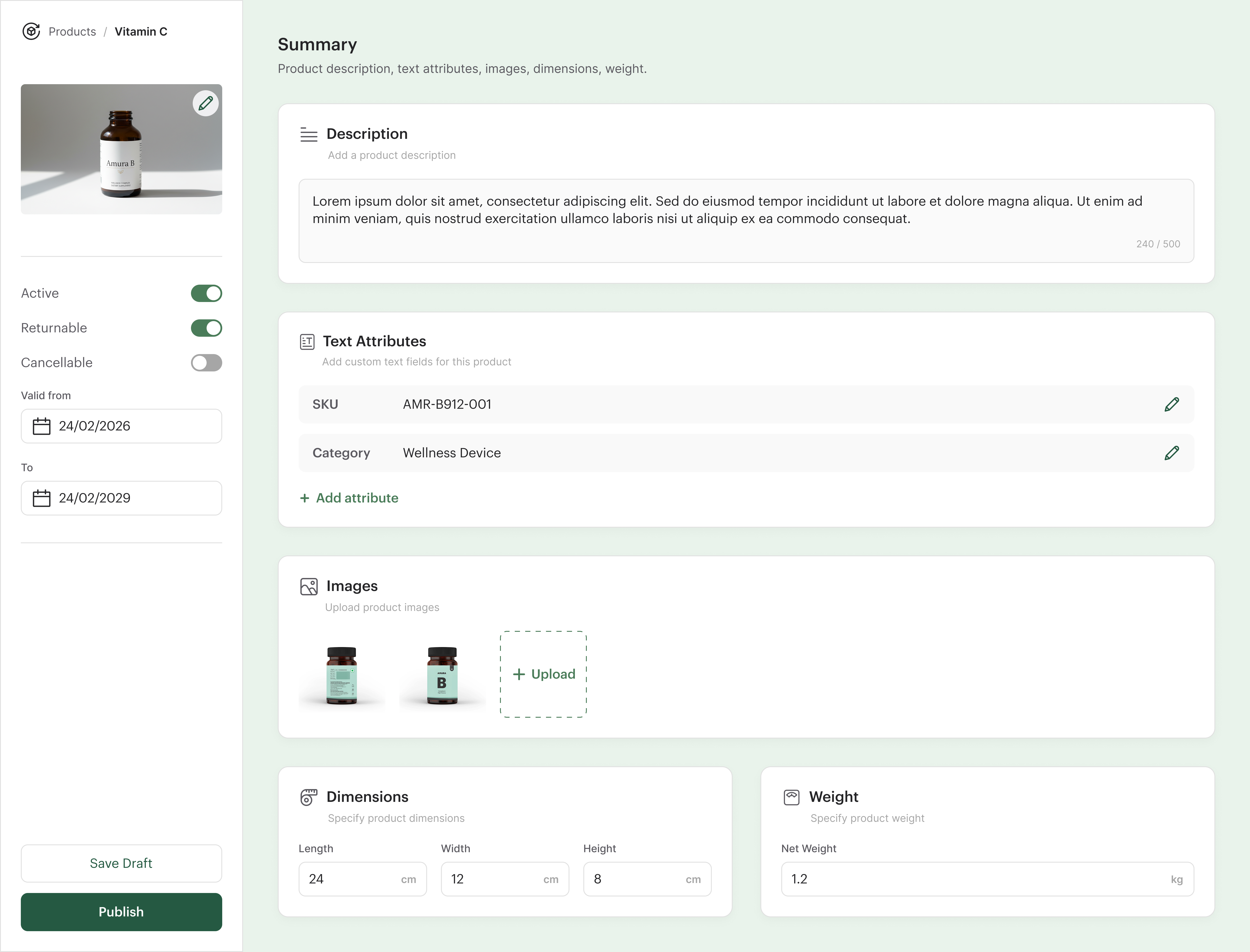
What gets configured at this level
Physical goods or digital deliverables. SKU, inventory unit, tax code, and fulfillment method all sit at this level. The store item inherits and never overwrites them.
Description, delivery modules (video session, live Q&A), images, and tiered pricing go into a single service record. Duration and operational T&Cs are set here, not downstream.
Products and services bundle into a room. The room gets a commercial skin.
Room Config is the operational unit. It groups sub-offerings into a sequence, the clinical pathway or the service program. Once the room is configured, a Store Item wraps it in a commercial layer: the active price, marketing copy, regional overrides, and T&Cs. That Store Item goes on the store.
The golden rule: fulfillment lives at the atomic level. The store item inherits it and never owns it.
AI fills everything at checkout except the payment.
When a patient checks out, each item in the cart is handled at the atomic level, so the system reads the sub-offering to know what gets delivered, how, and to whom. Before payment is captured, the AI fills all the fulfillment information: who the service is for, what slot to schedule, where delivery goes, and any collection specifics. The patient only needs to pay.
Browse and buy from inside the treatment room.
The store panel sits alongside the patient's chat, records, and meal plan. A single cart can hold items meant for more than one person, and each one checks out with its own fulfillment.
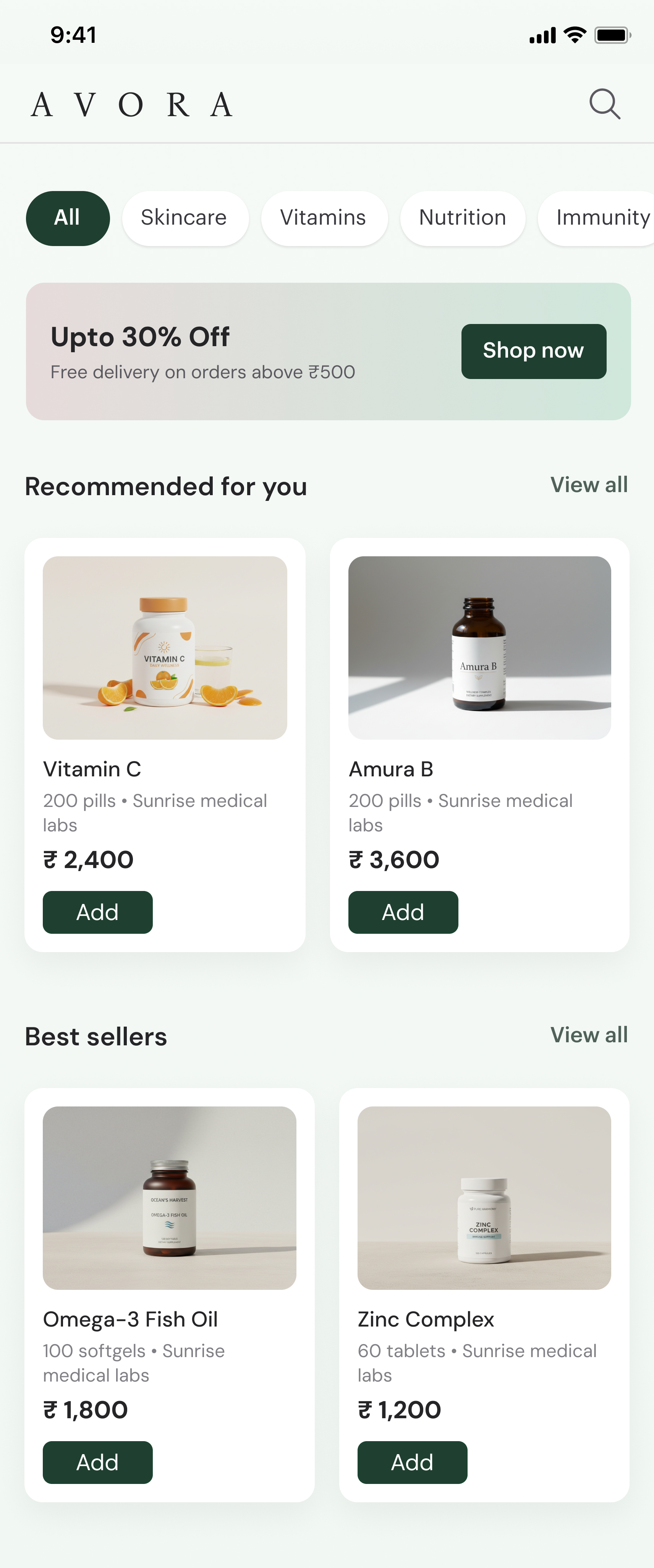
multiple people
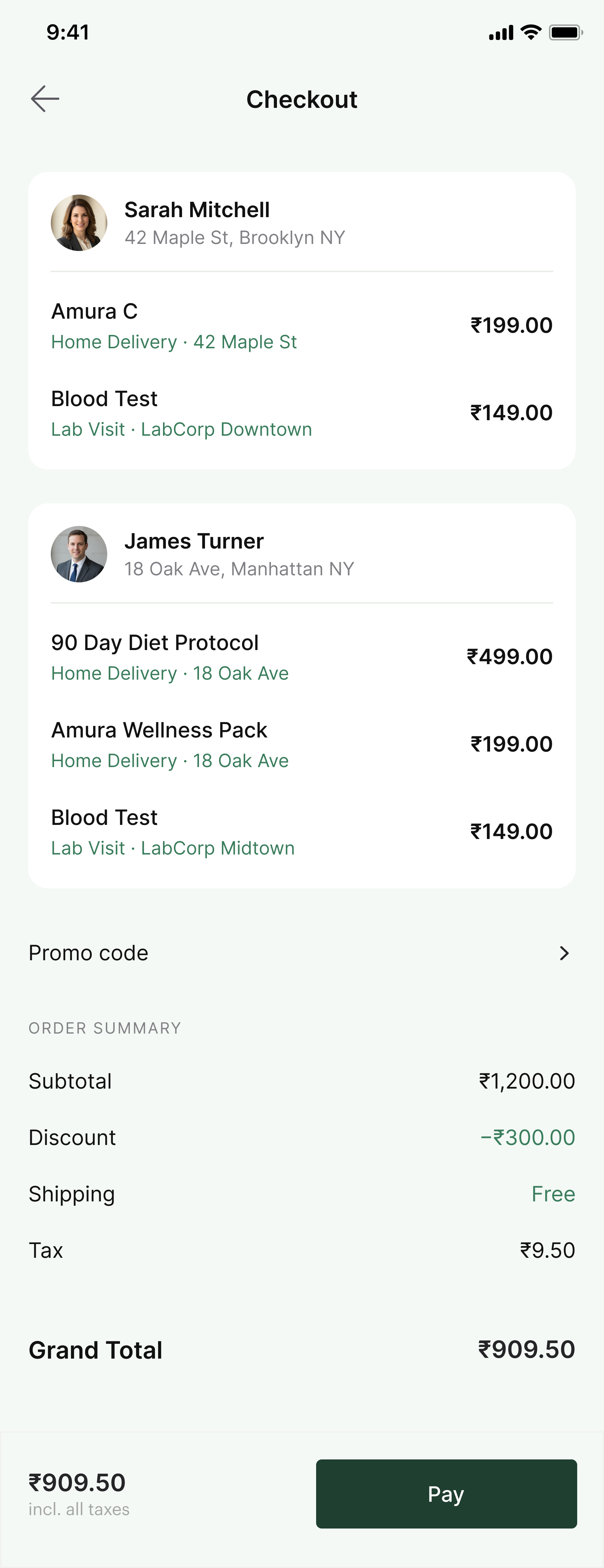
One cart, multiple offerings, ordered for multiple people. Sarah gets a home delivery and a lab visit at one address, James gets two deliveries and a lab visit at another, and both clear in the same checkout with their own fulfillment intact.
Products ship. Services activate. The room config runs.
Once payment clears, the system splits the cart at the atomic level and handles each item on its own terms. Physical products get dispatched to the confirmed delivery address. Services activate via the room config that was attached at configuration, so the session, the Q&A, and the clinical program all spin up on their own. No manual trigger needed.
The manual work went away. The relationships stayed.
- Every sale initiated through a manual WhatsApp call
- Pricing inconsistent, different quotes per rep, per call
- Renewals tracked and triggered manually for each client
- No self-serve path from discovery to purchase
- Full catalog on a store front, self-serve discovery and checkout
- CPQ engine calculates price dynamically, single source of truth
- Subscription renewal in one tap, automated across all active clients
- Clinical onboarding and purchase unified into one flow
atomic to storefront
zero manual overrides
across all active clients
"Every payment used to come in and someone had to match the transaction ID manually, confirm it, then go trigger the onboarding. A separate step every time. Now the store handles all of it. Payment clears, the patient is in, the room opens. We went from fifteen leads a day to five hundred and fifty-two on a single day in April."